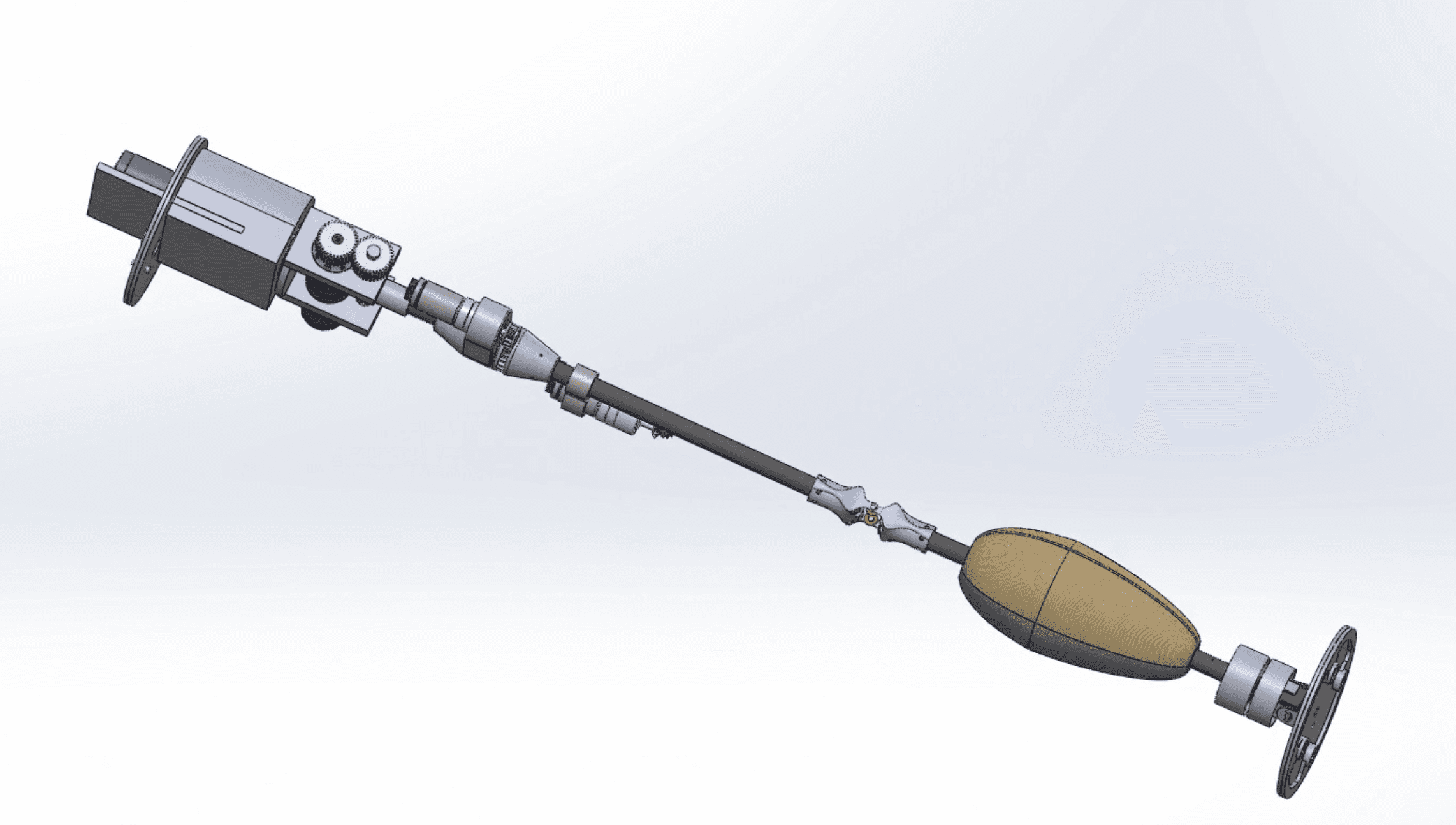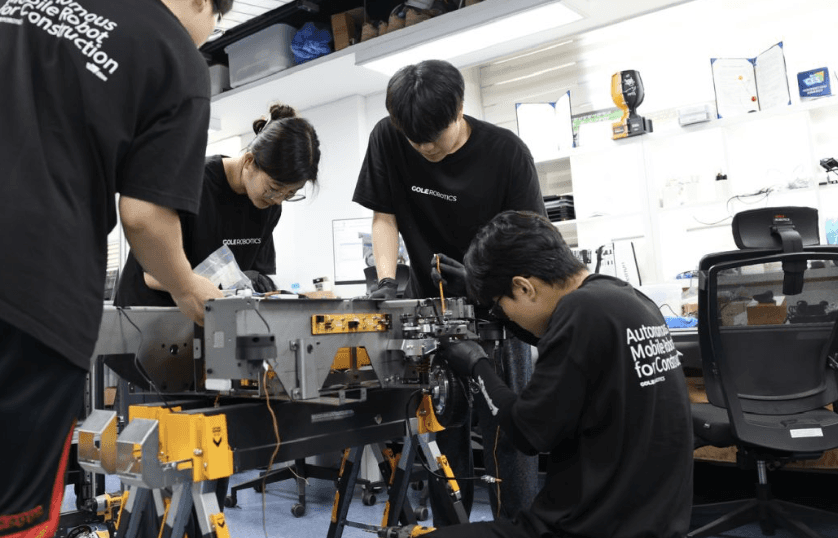
A 500 kg-class autonomous mobile robot built for construction material transport. The platform required high-load structural integrity, reliable mobility over uneven terrain, and full mechanical-electrical integration across a multi-disciplinary team.
My role covered the complete mechanical development cycle — from SolidWorks design through fabrication, assembly, and field demonstration.
1. Structural & Mechanical Design
Designed the full lifting module and AMR chassis in SolidWorks using custom sheet-metal frames, CNC-machined aluminum components, and 3D-printed assemblies. Design decisions prioritized load-path integrity, manufacturing feasibility, and maintenance access from the first sketch.
2. Mobility & Lifting Mechanisms
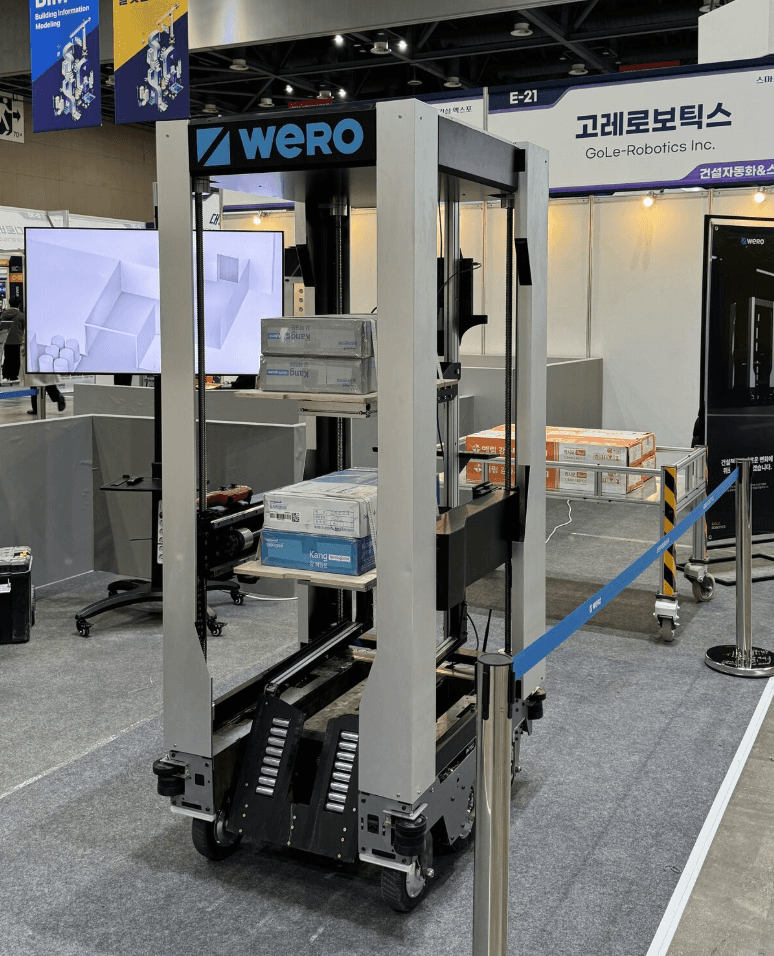
Rocker-bogie-inspired suspension for stable traversal over construction-site surfaces. High-strength forklift system for vertical actuation — I designed the kinematic layout, load-bearing brackets, and mechanical interfaces between lifting rails, chassis, and AMR base.
3. Electrical & System Integration
Coordinated PCB placement, wire routing, heat management paths, and actuator interfaces with the electrical team. Performed hands-on prototyping: soldering, wiring, motor calibration, and sensor integration for position and load feedback.
Detailed design documentation not publicly disclosed due to proprietary obligations.
High-Load Lifting Performance
Lifting module validated at 500 kg capacity with consistent vertical actuation under static and dynamic loading conditions.
Reliable Mobility on Uneven Terrain
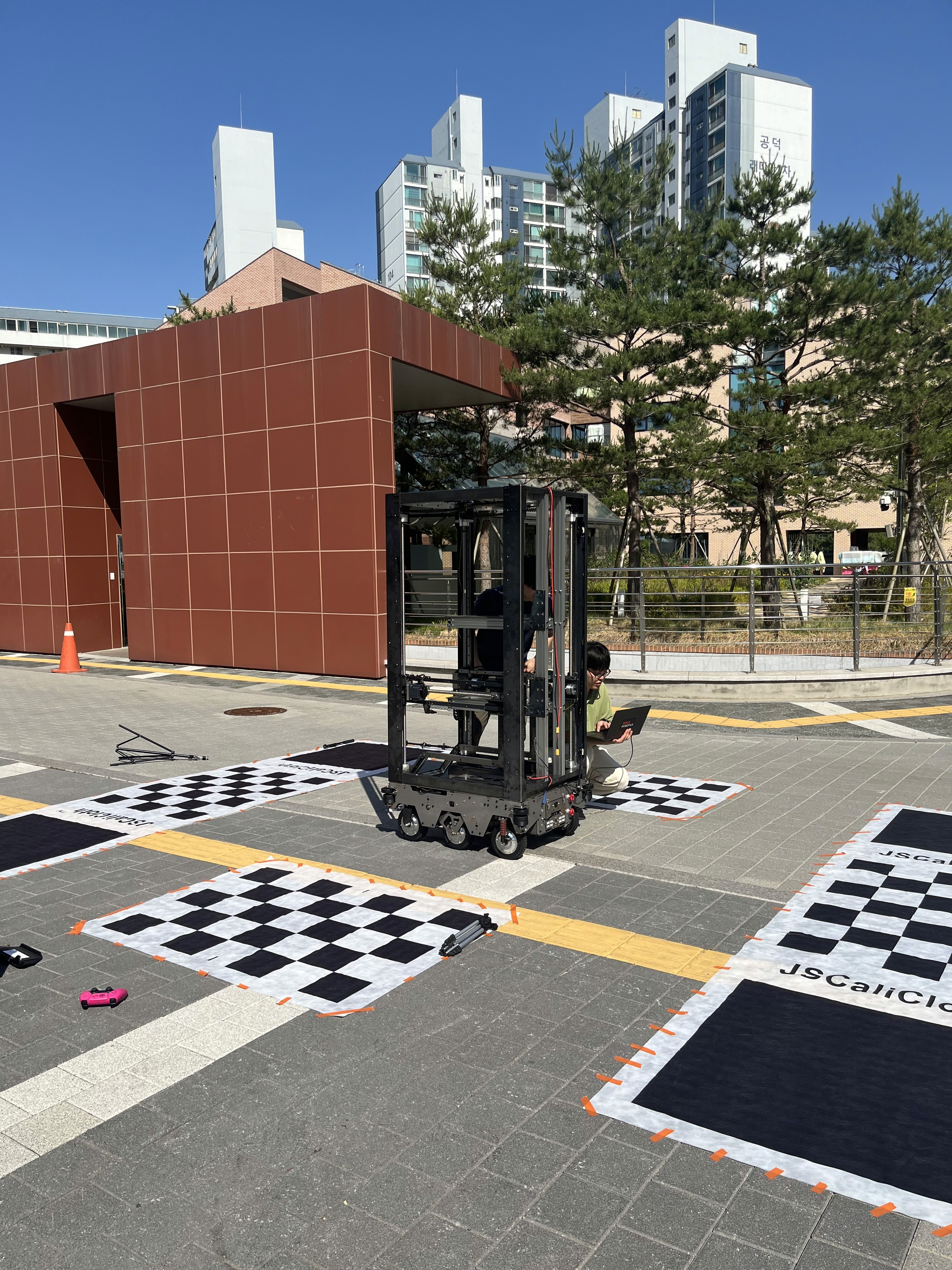
Rocker-bogie suspension enabled stable traversal across uneven construction surfaces and ground discontinuities.
Field Demonstration Readiness
Platform showcased at industry events and outdoor evaluation trials, validating functional maturity under realistic operating conditions.
The primary engineering challenge at this scale was managing competing constraints across load paths, thermal management, and assembly access — all of which had to be resolved in CAD before fabrication, not after. A design decision that simplified one system routinely created integration problems in another.
Cross-team coordination was as much a technical challenge as a managerial one. Electrical routing and mechanical structure had to be co-designed from the start — retrofitting either onto the other at this load scale was not an option.
Designed the full 500 kg lifting module and AMR chassis — sheet-metal structures, CNC-machined components, and 3D-printed assemblies.
Engineered suspension layout, load-bearing interfaces, and forklift integration.
Coordinated electrical-mechanical integration: PCB placement, cooling paths, cable routing, and actuator interfaces.
Performed hands-on fabrication, wiring, motor calibration, and sensor integration.
Led cross-team communication across mechanical, electrical, and software subteams through field demonstration.